8. The Mandelbrot Set and Julia Sets
Read the opening pages · printed page 111
The Mandelbrot Set (mandel.c)
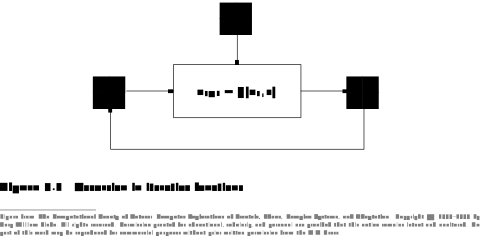
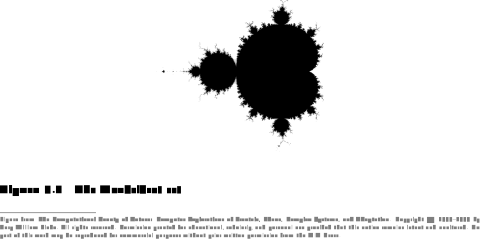
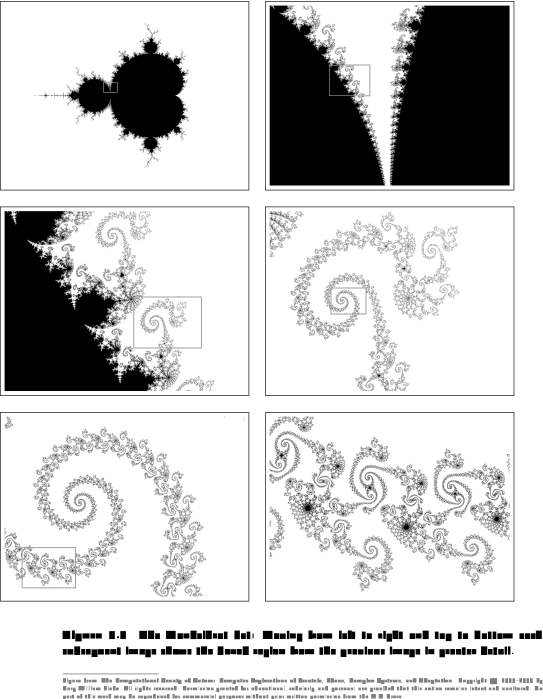
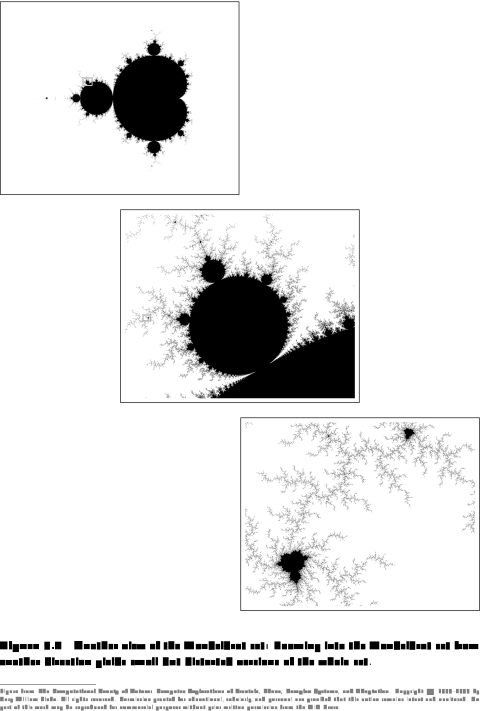
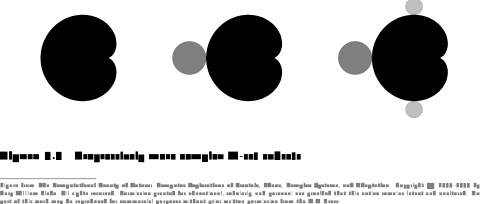
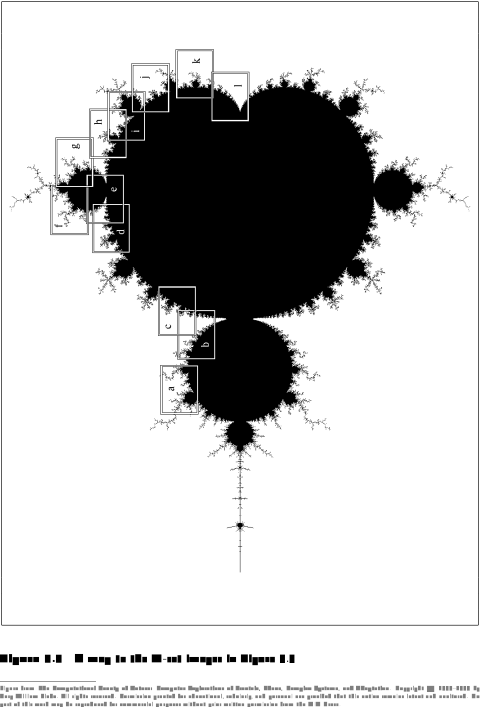
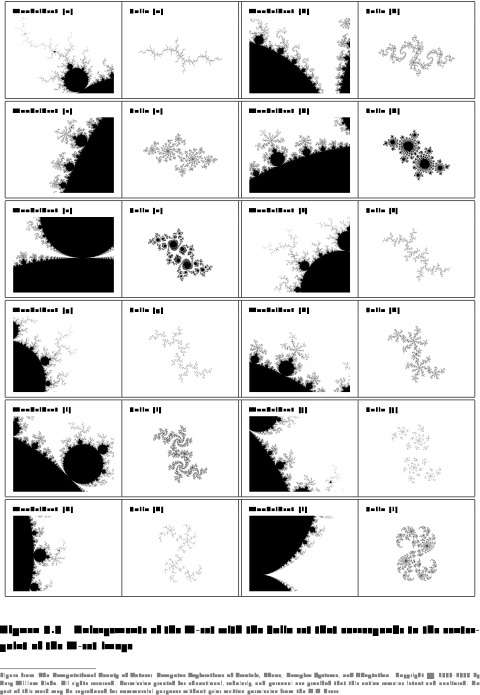
For each point c of the plane, iterate z = z squared plus c starting from zero and count how many steps it takes to escape. Points that never escape are the set; the colors outside are the escape counts. That is all the program does, and the boundary is infinitely detailed. The zoom follows curated targets (seahorse valley, elephant valley, miniature copies of the whole set) as deep as the graphics hardware's arithmetic allows, then fades and starts again from the book's framing. Full screen →
Julia Sets (julia.c)
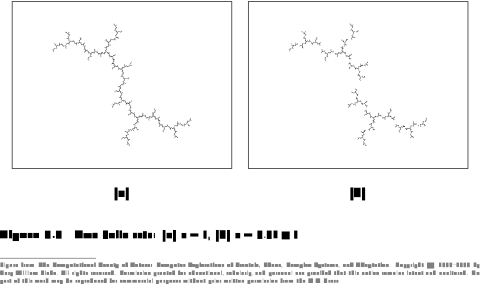
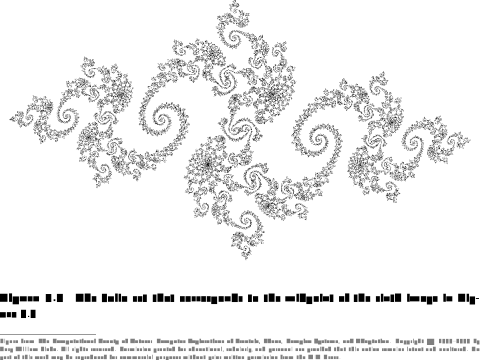
Same iteration as the Mandelbrot set, but now c is fixed and the starting point z varies across the screen. Every c gives a different Julia set, and the Mandelbrot set is the catalog: c inside it gives a connected Julia set, c outside gives dust. Here c walks slowly around the edge of the Mandelbrot set's main cardioid, drifting a little inside and outside, so the picture morphs continuously between solid, dendrite, and dust. Full screen →
Sections
- Iterative Dynamical Systems
- Complex Numbers
- The Mandelbrot Set
- The M-Set and Computability
- The M-Set as the Master Julia Set
- Other Mysteries of the M-Set
- Further Exploration
- Further Reading