16. Autonomous Agents and Self-Organization
Read the opening pages · printed page 261
Virtual Ants (vants.c)
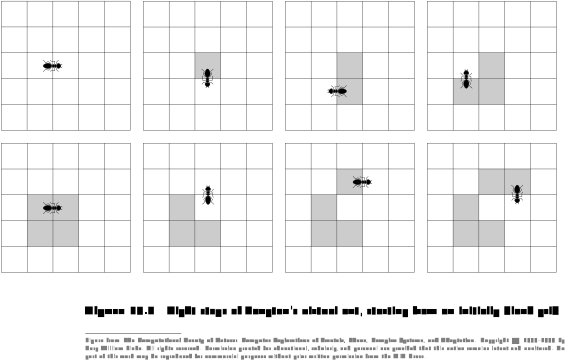
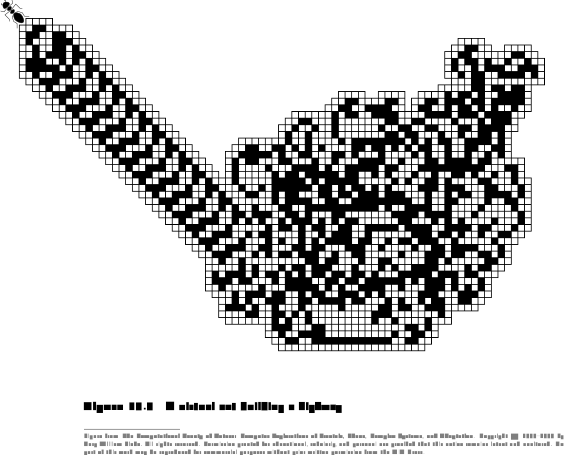
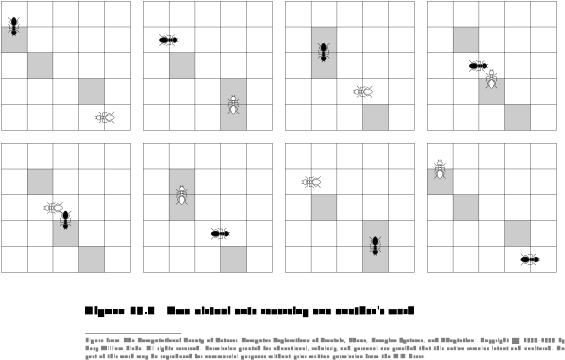
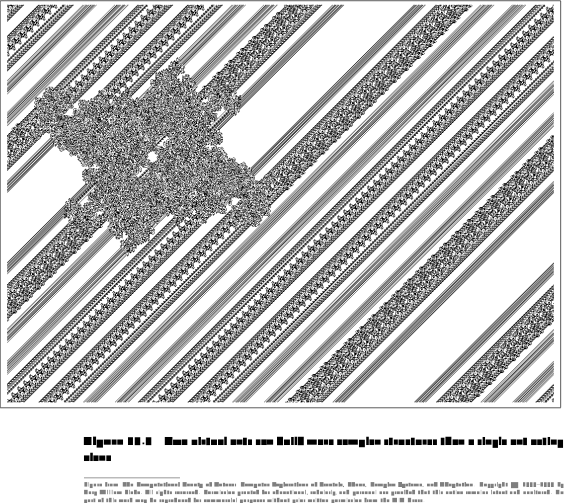
Langton's ant follows two rules: on a white cell turn right, on a black cell turn left, and flip the cell you leave. For about ten thousand steps it makes a chaotic mess, then, for reasons no one has proved, it starts building a diagonal highway and never stops. The book generalizes this to any number of cell states with a rule string; the page starts with the classic ant and moves on to the multi-state variants with a few ants at once. Full screen →
Termites (termites.c)
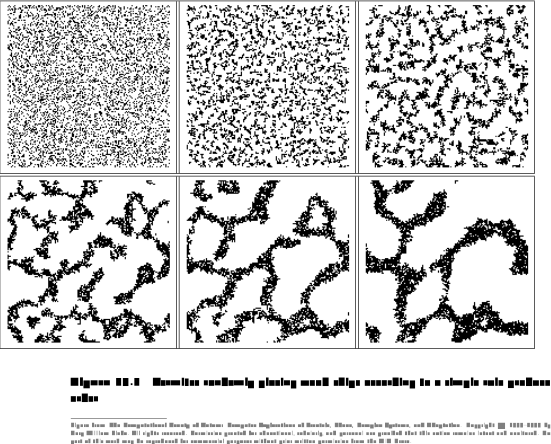
Each termite wanders at random. If it bumps into a wood chip while empty-handed it picks the chip up; if it bumps into a chip while carrying one it drops what it has. Nobody plans anything and no termite can see more than one cell, yet the chips end up in a few large piles. The piles form within a minute; each run uses a different chip density. Full screen →
Boids (boids.c)
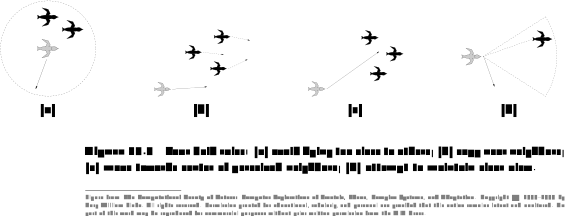
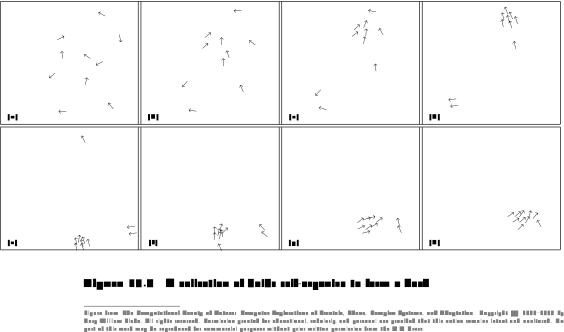
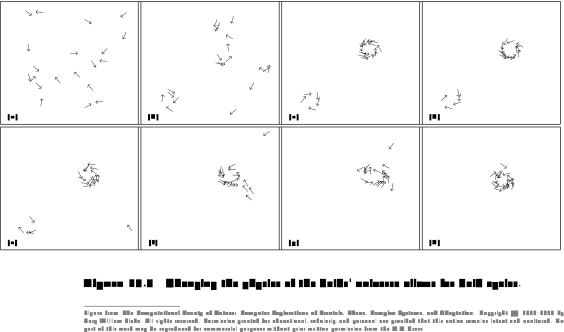
Reynolds's boids: each bird tries to fly in the direction its neighbors fly, toward the center of its neighbors, away from anyone too close, and around anyone blocking its view. Four local rules, no leader, and a flock appears. The rule weights drift between regimes over time, so the same birds behave like starlings, then gnats, then a pack fighting over the center, then a school. Full screen →
Sections
- Termites
- Virtual Ants
- Flocks, Herds, and Schools
- Unifying Themes
- Further Exploration
- Further Reading